
Disclaimer: This post may contain affiliate links. As an Amazon Associate, I earn from qualifying purchases.
On a trip through the Midwest, we spent a day at Potawatomi Zoo. It’s Indiana’s oldest zoo, and it had been a long time since I visited.
And it was fun to explore the exhibits and note how it has changed throughout the years. There were animals from all over the world, and we learned some new facts.
I’ll share what to know when visiting, exploring the zoo and what to expect, and tips.
Getting to Potawatomi Zoo

We picked up a relative in Michigan before going to the zoo, so we started the trip from there.
We took US-31 South to US-20 East, ending up on Ironwood Drive. There was a lot of construction, so we had to take some back streets.
When we arrived in the late afternoon, there were a lot of cars in the parking lot. We weren’t expecting that on a weekday.
Visiting Potawatomi Zoo
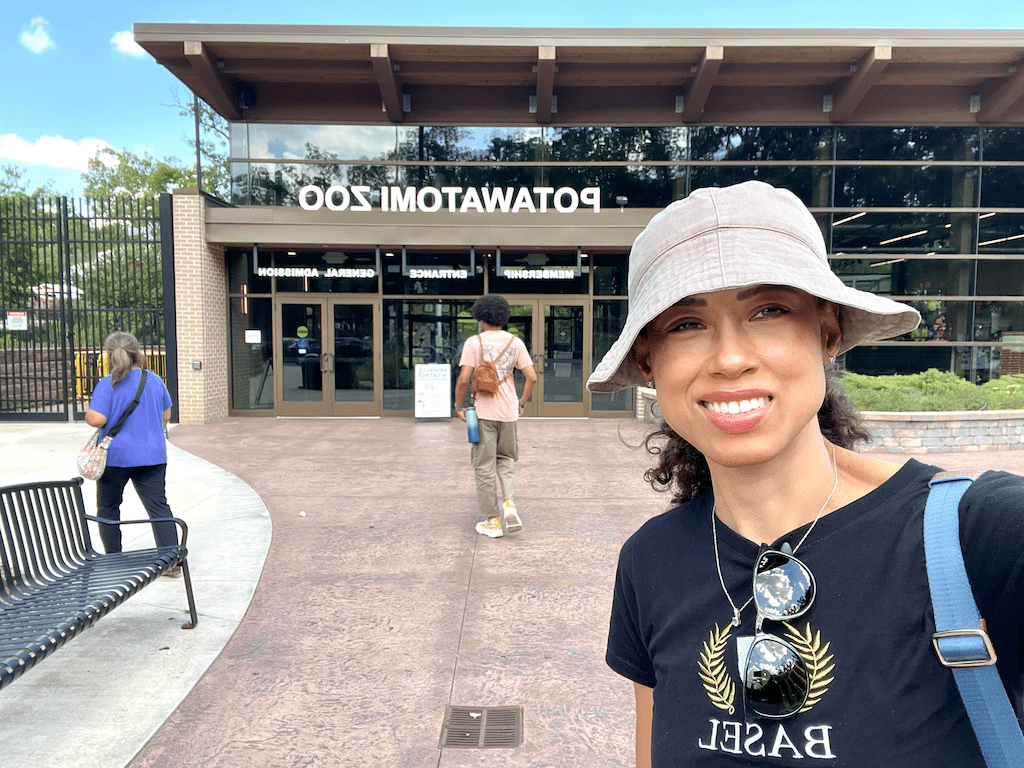
The zoo is open daily from March through November, and the hours change depending on the time of year.
They always open at 10 a.m., and usually close at 5 p.m., except for the summer, when they’re open later. Be sure to check the schedule.
During the winter months, they’re only open on the weekends. I’ve never gone when it’s cold, and it can get snowy in this area.
Tickets are relatively cheap, and we paid $14 per adult to enter.
Zoo History
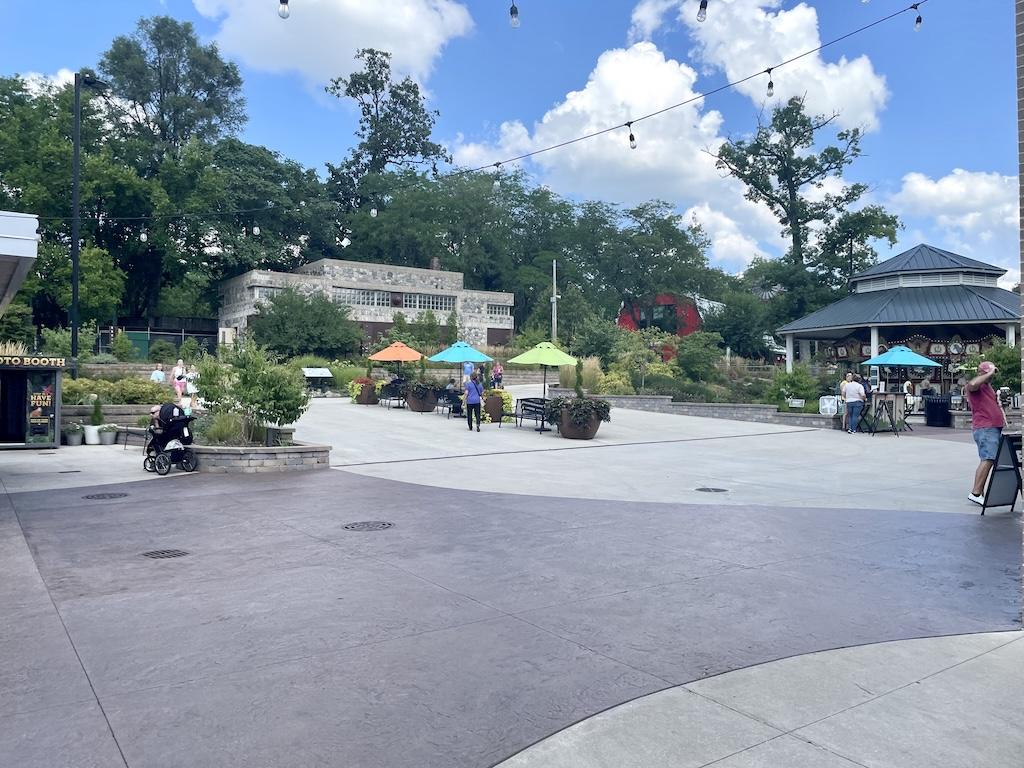
Remember when I mentioned that this is Indiana’s oldest zoo? Well, it’s over 100 years old and actually began as a duck pond in Leeper Park.
The zoo was first named the South Bend Zoo. However, it was renamed to honor the Potawatomi Indians, the first native people who lived in the area.
Fast forward to today, and it’s a thriving area with 400 animals. Run by the Potoawatomi Zoological Society, they offer classes for kids and adults to learn more about the animals.
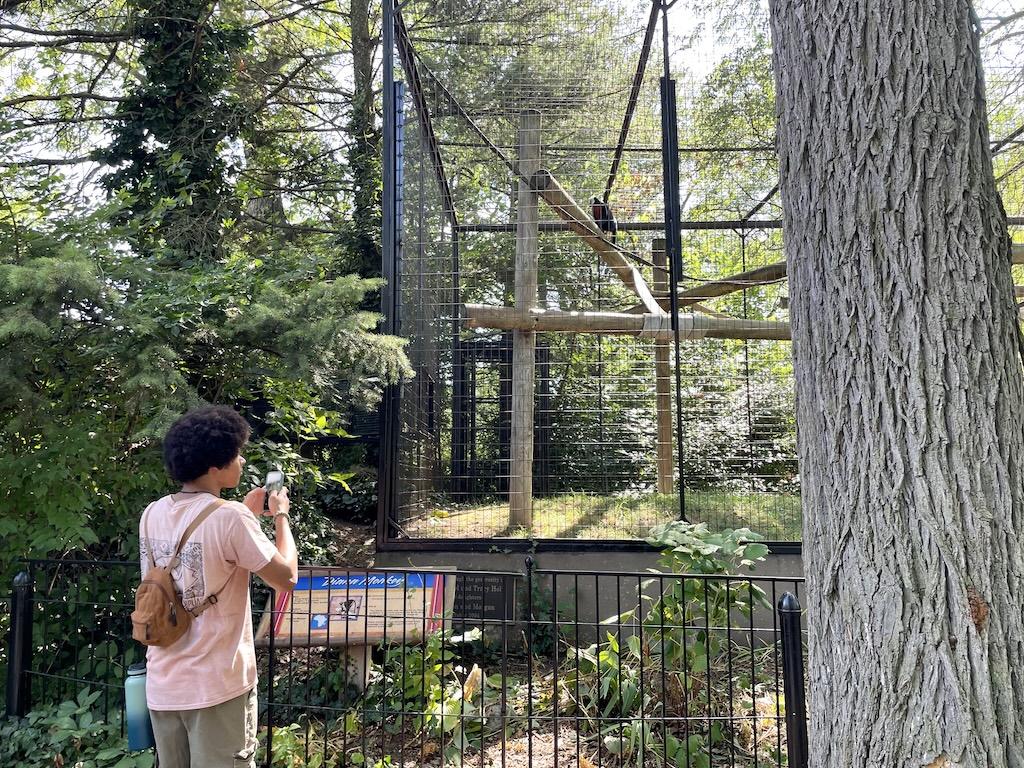
Although I’ve been to much bigger zoos, it’s a nice size, and still expanding.
On our visit, we saw that they’re adding more cat houses. They were still in process, but I’m curious to see what it’ll look like when done.
But for now, there’s plenty to see and do. I’ll take you through some highlights of our day.
The Learning Center
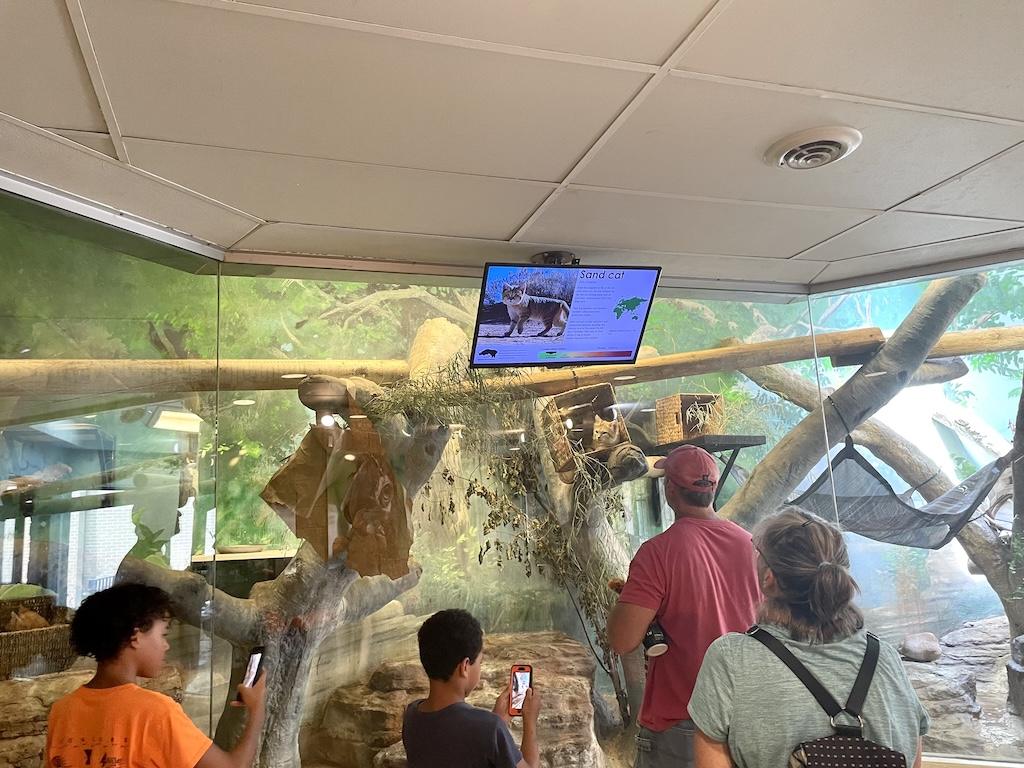
The first exhibit we explored was the Learning Center, which houses small mammals and reptiles. After walking through the entrance, you’ll see the merry-go-round, and it’s the building to the left.
They have lizards, snakes, foxes, monkeys, a sloth, and exotic sand cats.
Now, I being a cat lover, had studied much about sand cats in the past. I felt like I knew all about them, but this was the first time I’ve ever seen one in real life.
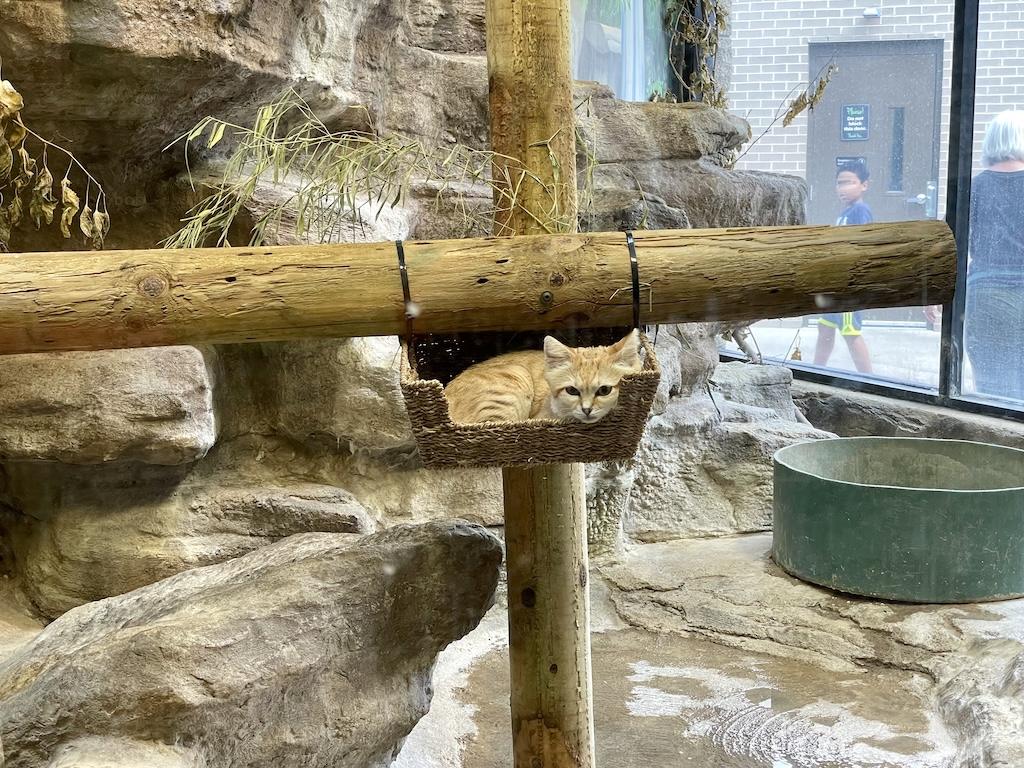
And they were a cute as could be. Many people were standing around, taking pictures, and watching them.
You won’t naturally find them around here, as they live in northern Africa and Asia. Plus, they’re nocturnal and hide, so seeing one in the wild would be rare.
Kangaroos Hopping Around
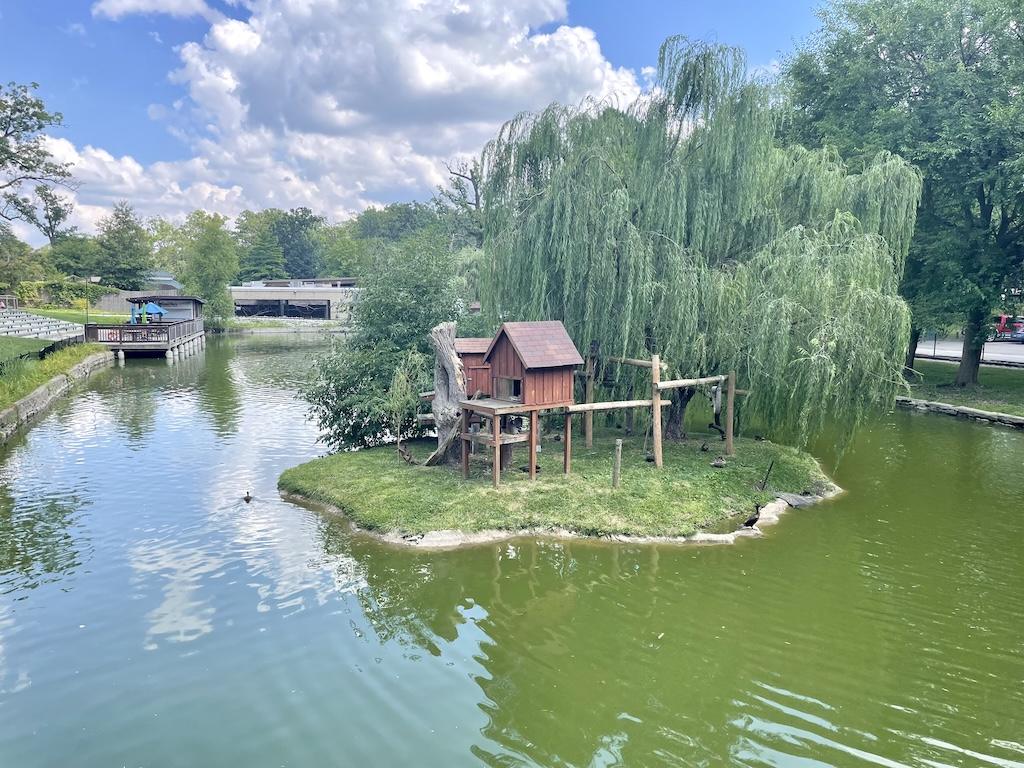
After passing the capybara, anteater, and parrots, we crossed a bridge near an island. Here you can find ring-tailed lemurs that hang out in a tree house.
They weren’t very active this day, so we kept going down the bridge to the Red Kangaroos.
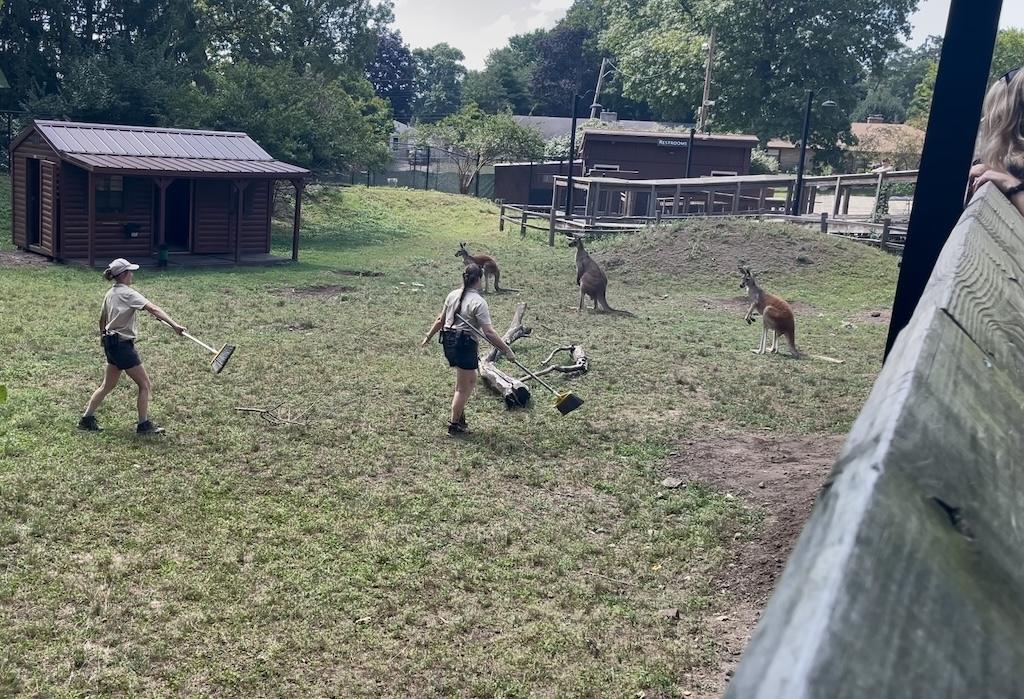
Many people were watching the commotion going on. As we walked up, we saw zoo staff trying to get the kangaroos into another section.
They said that they had to move them into a smaller yard for an exam. It seemed like either the kangaroos saw this as a fun game, or they knew what was coming.
But it was funny to watch them hop around. They sure made the staff work!
River Otter Viewing Pavilion
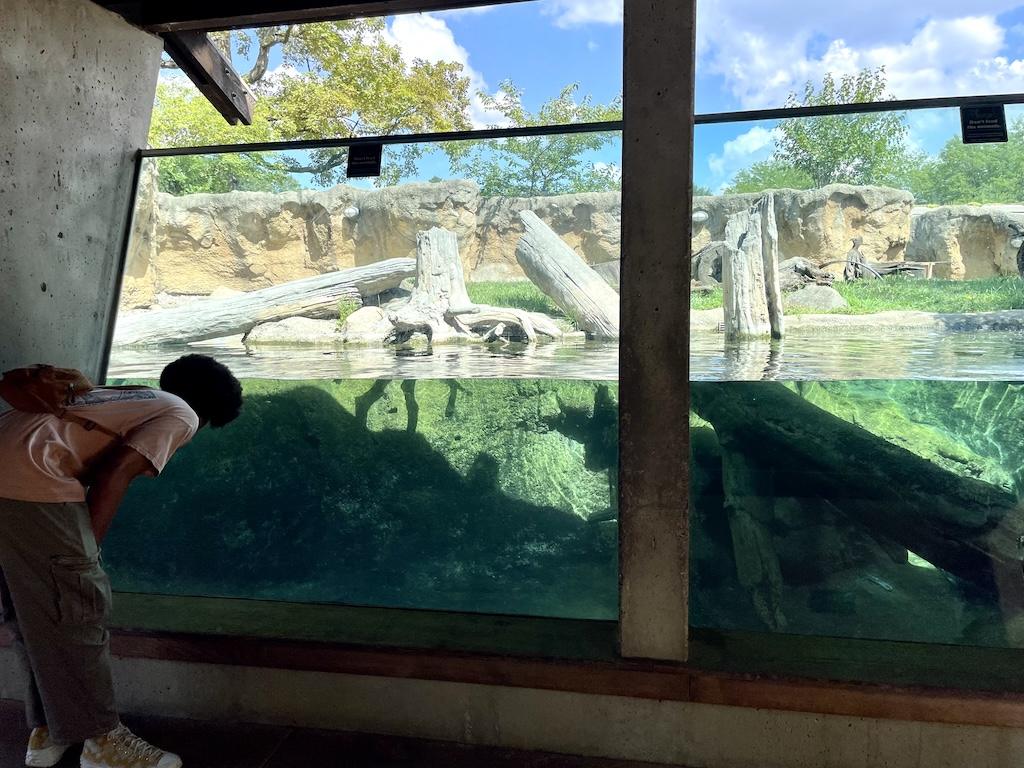
After that, we passed an alligator, more birds, monkeys, bison, and a bobcat. Then we came to the river otter exhibit, where you can view them swimming underwater.
At first it seemed like none were around, so we waited a couple of minutes. Then they entered the scene in playful banter.
Whereas the other animals were lounging around in the heat, the otters were splish-splashing and having fun. They made that pool look like a blast to swim in.
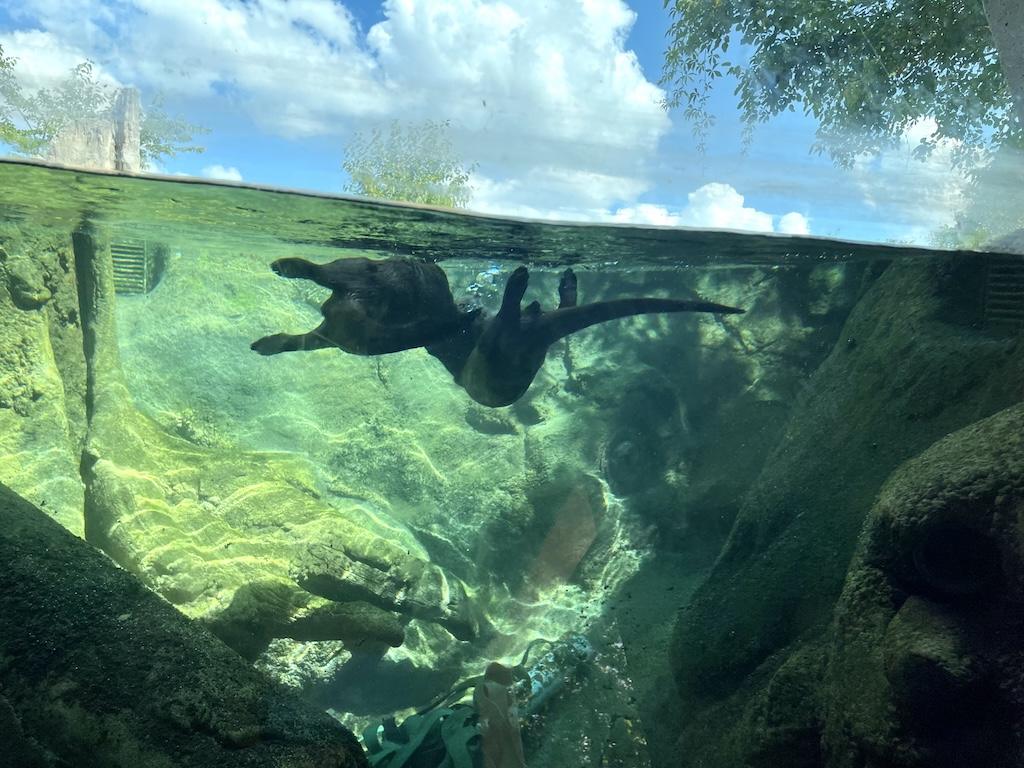
On the topic of water, pollution was one of the reasons the otters were going extinct in the early 1900s. Along with trapping and loss of habitat, they declined in North America.
But today, they have grown back and repopulated. As we watched them play, I thought about how precious and cute they were to watch.
The Giraffes
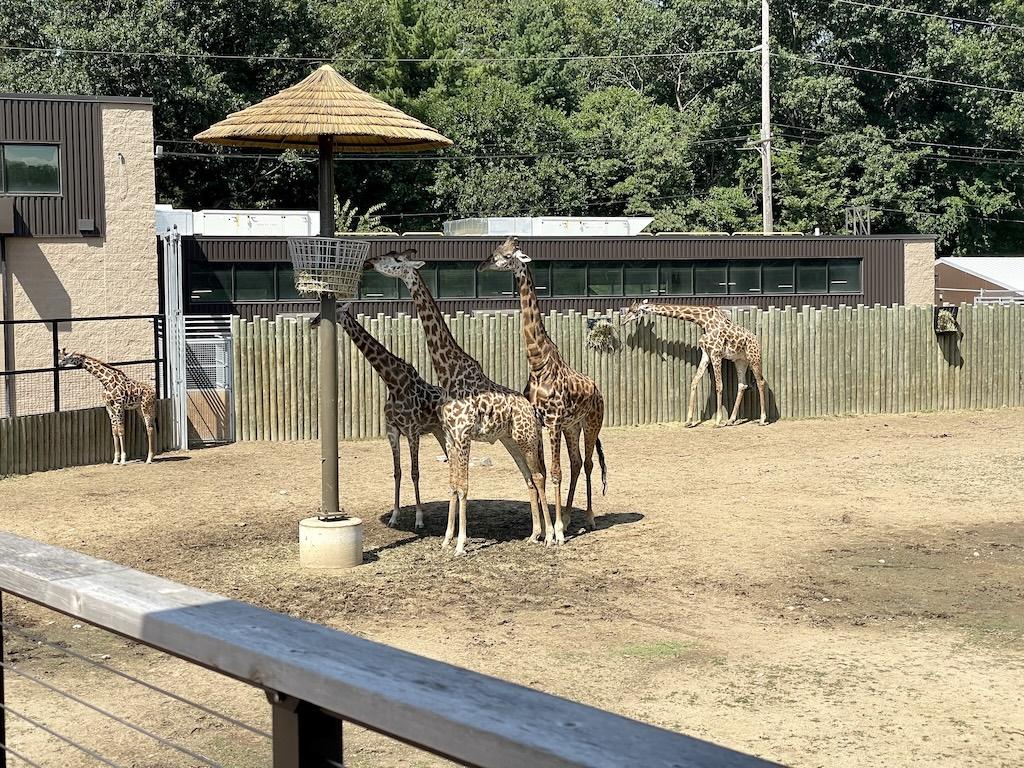
Another lively hub at the zoo is the giraffe area. It started to get hot over there, and I felt like I was stepping right into Africa.
The giraffes were so peaceful, grazing, and poetic in their movements. We found some shade and sat down to admire their beauty.
It is quite striking to see how tall they really are. Actually, they are the tallest animals in the world and can grow up to 18 feet in height!
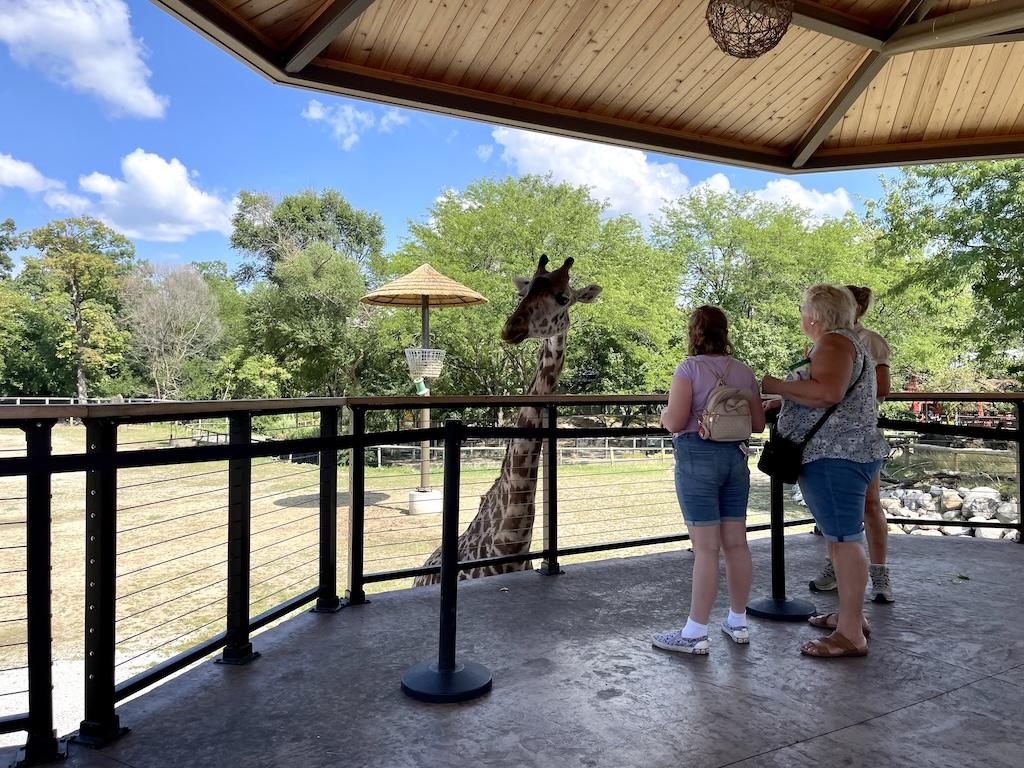
And here, you can have an animal encounter with them. We saw people get close up and feed them.
You’ll buy food from the staff at the little stand. At first, the staff said they probably wouldn’t come over because they had just been fed.
Once the girl started waving the leaves, one came over. Then, more people came up to see the giraffe more closely.
Besides seeing these pretty creatures, you’ll also find ostriches, storks, and zebras in this area. We saw all of these animals in the distance.
Big Cats and Dogs
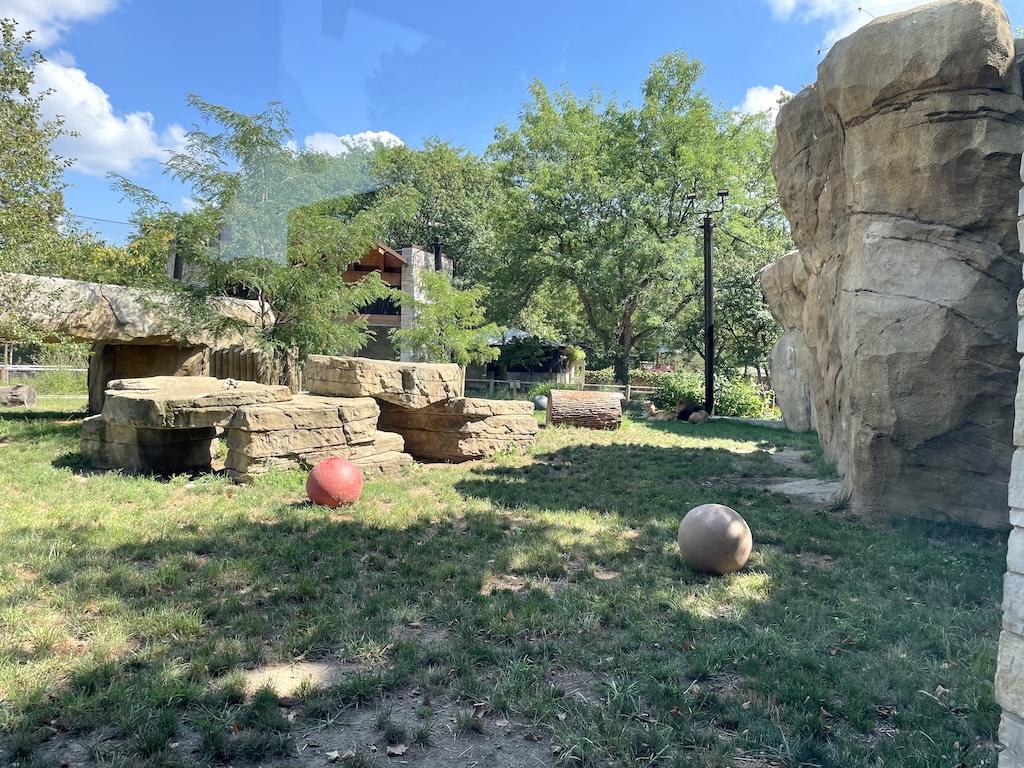
After leaving the giraffe area, we walked around and saw more animals from Africa. The lions and Painted Dogs were next.
At certain times of the day, you might hear the lions roaring all through the zoo. In fact, lions are so loud that you could hear one 5 miles away.
We viewed them through the glass, as they were lounging in the distance. Then we looked for the Painted Dogs, and they were hiding in the shade.
I had also researched this animal before and learned how some people view this wild dog as a nuisance in African villages.
The Painted Dog, along with the lion, are both declining in numbers due to people hunting them and seeing them as threats. That’s a shame, because they are some of the most beautiful animals.
Flamingos and Catfish
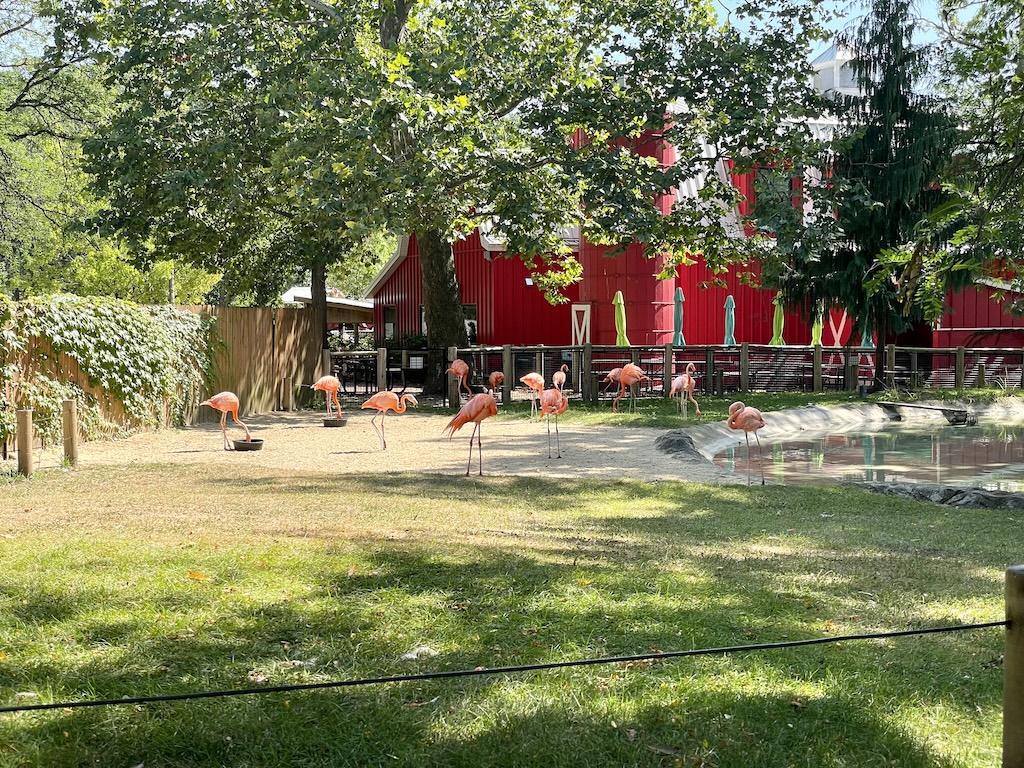
After we left Africa, we walked to the flamingos and fish. This part of the zoo seemed to have more shade from the trees.
I just love the orange and pink hues on this bird. What a colorful scene with them standing against the backdrop of the red barn.
The last time I saw flamingos in the wild was when I visited the Everglades in Florida. And it was the prettiest sight to see them take flight over the water.
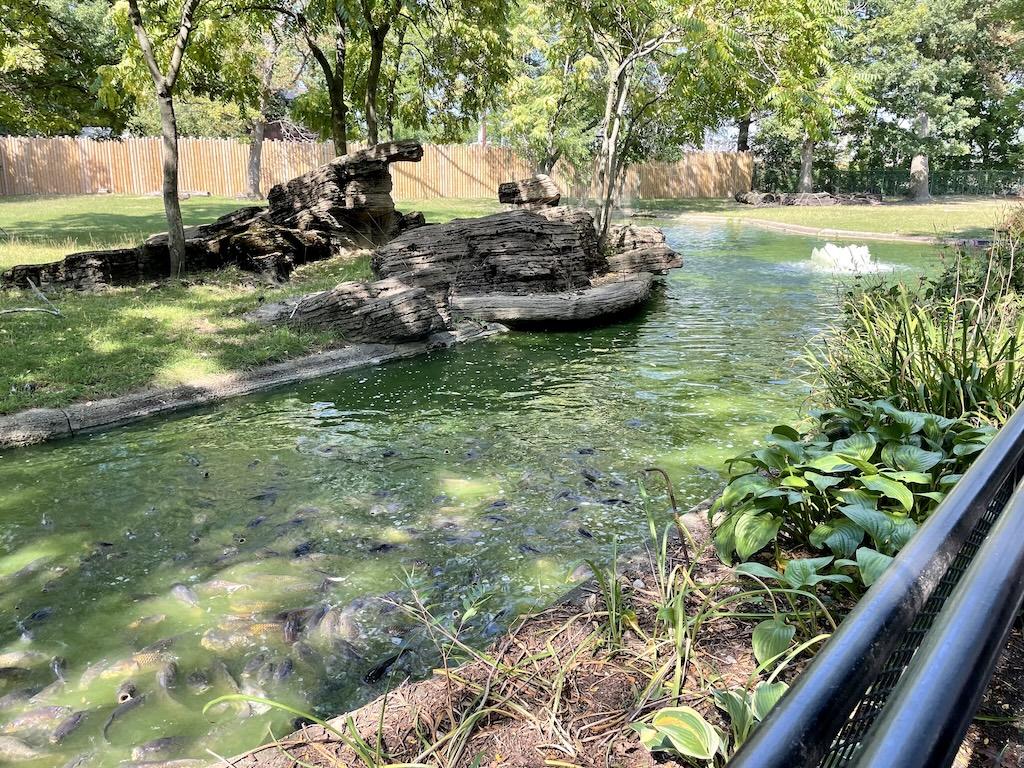
Nearby, we feed the catfish, which were swimming around in a pond. We decided to feed them, so we bought some food.
We only paid 50 cents and got a handful of nuggets. Remember to only feed them the fish food and nothing else.
Anyway, there were so many of them, and they were fighting over the food in a swarm!
Barn Animals
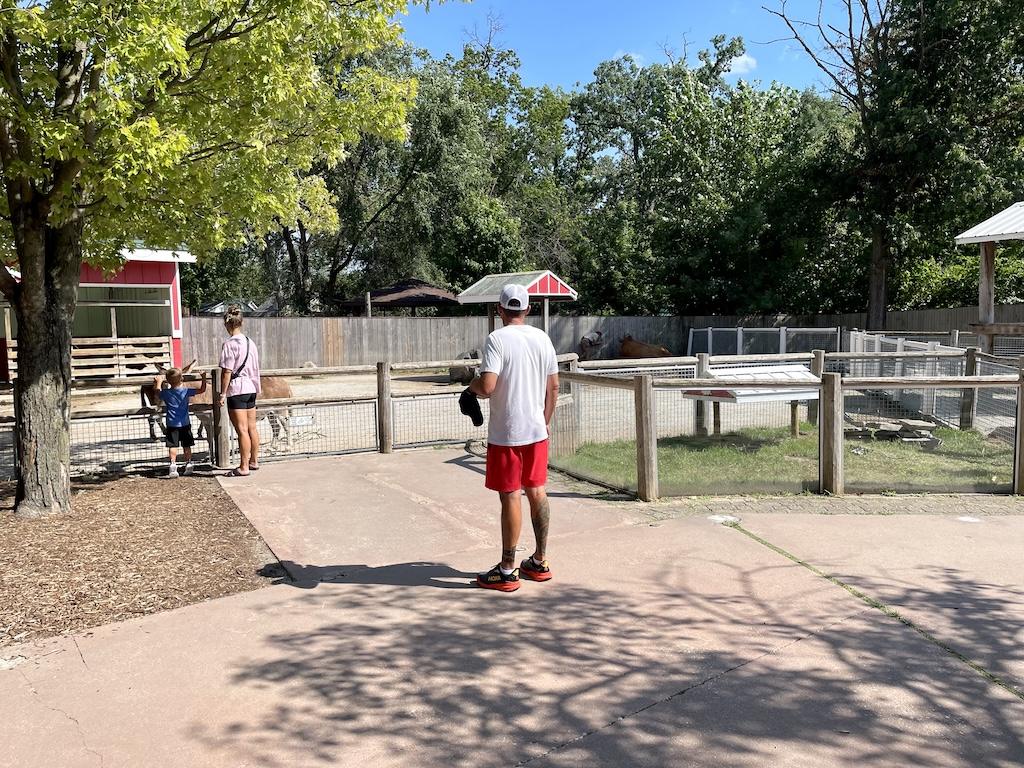
Next, we went to the domesticated animals, or what I call the barn animals. Here you’ll find chickens, roosters, goats, cows, and llamas.
Over here, you can feed and pet some of the animals. You’ll want to clean your hands before and after touching them at the wash station.
Although we saw other people petting them, I didn’t. My allergies were already kicking in, and I didn’t want them getting worse.
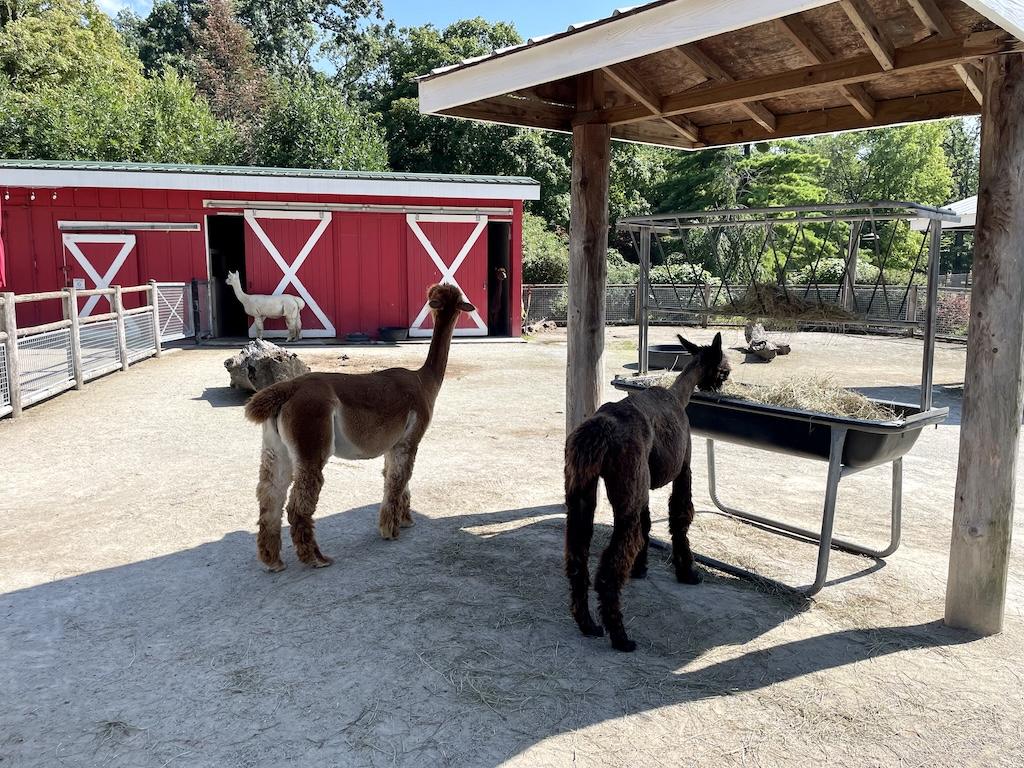
But it reminded me of elementary school when we’d take field trips to farms to learn about the animals.
After that, we made our way around to see more exotic animals and the tiger exhibit. This is where the zoo was expanding.
We didn’t see any cats over there, so I guess we’ll have to come back!
Notes
Well, we spent a couple hours here and saw just about everything except for the bear. I guess we walked right past the exhibit and didn’t realize it.
So that’s why you’ll want to grab a map, because I think the bear exhibit was a little hidden. We realized it too late, when they were announcing that the zoo was closing.
You’ll want to wear good walking shoes and wear a hat. You can bring water too, but no straws are allowed in the zoo.
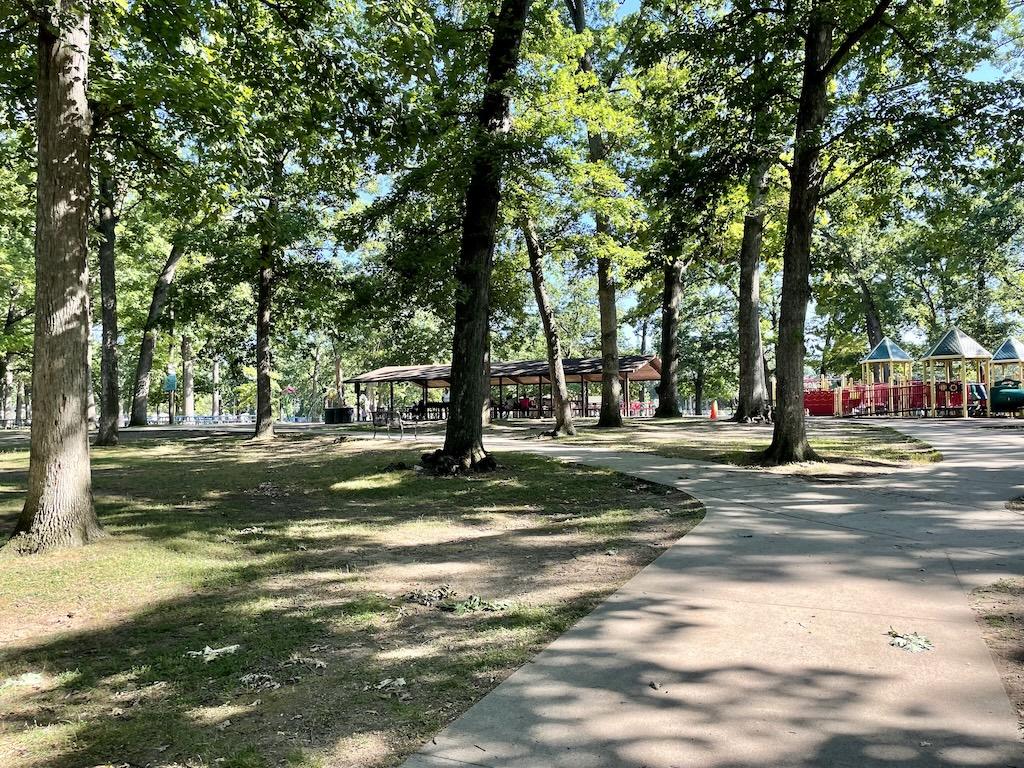
Potawatomi Park is next to the zoo and has water sprinklers and a playground. We’ve eaten lunch over here, and it’s a nice shaded area with lots of picnic tables.
There’s also the Potawatomi Conservatory nearby, which has flowers and plants. It’s a separate fee to enter, and we didn’t make it over there this time.
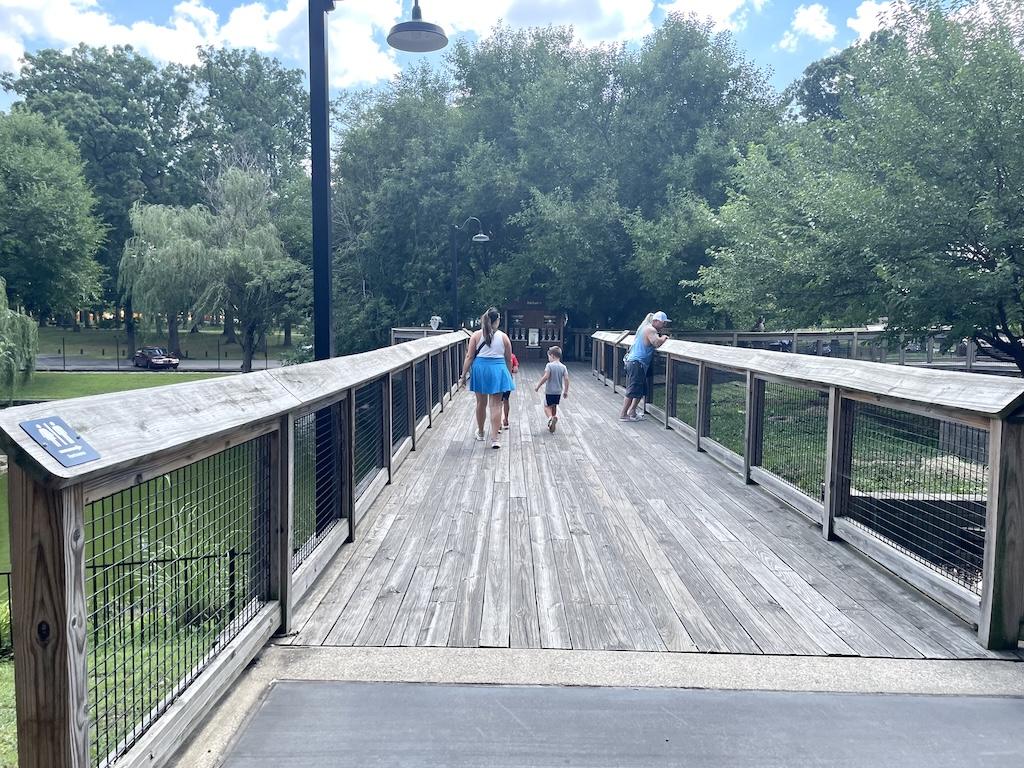
It was fun visiting Potawatomi Zoo and discovering which animals they have. I actually got to see a couple I’ve never seen in person before.
It might not be on your radar to go, but it’s a fun and educational way to spend the day. You might even learn or see some new things, like I did.
Read More
